The gap between an AI demo and a production system
Most agentic projects don’t fail because of the model. They fail because nobody planned for governance, permissions, observability, or operational trust.
The demo works. The business case makes sense. But production demands reliability, auditability, and control that most prototypes were never designed for.
challenge
Too much access. Not enough control
How we Help
An agent with broad permissions can become a risk faster than it becomes useful. Identity, access boundaries, and approval flows matter.
challenge
No visibility into autonomous decisions
How we Help
If an agent makes a mistake, can you see exactly what happened, why it happened, and what action it took? Most teams cannot.
challenge
Governance arrives too late
How we Help
Adding controls after deployment is expensive. The most successful agentic systems are designed with governance from the start.
challenge
AI productivity that never reaches the team
How we Help
Individual engineers may move faster with AI, but organizational gains only happen when workflows, approvals, and delivery systems evolve too.
DIAGNOSIS
Before building agents, we validate the opportunity
Not every workflow should become an agent. We identify where automation creates measurable value and where traditional automation is the better answer.
What we evaluate
Workflow volume and repetition
Identify repetitive, high-frequency processes suitable for automation.
Tool and API accessibility
Evaluate whether agents can securely access required systems and actions.
Governance readiness
Assess controls, approvals, auditability, and compliance requirements.
Data quality and integration maturity
Review data availability, consistency, and integration readiness.
Team capability and ownership
Define ownership, operational responsibility, and support readiness.
Operational risk and blast radius
Measure the potential impact of failures, errors, or unintended actions.
Outcome
Readiness score
Prioritized use cases
ROI estimates
Implementation roadmap
OUR PLAYBOOK
Discover. Design. Govern. Deploy.
We don’t start with agents. We start with business workflows, then build the governance, integrations, and operating model required to scale them safely.
Identify workflows where agentic automation creates meaningful business value.
002
Design the control layer
Define permissions, governance, approval paths, observability, and escalation logic before implementation.
003
Build and Integrate
Connect agents to your systems, tools, and workflows through secure integrations and evaluation frameworks.
004
Deploy, Govern & Optimize
Roll out safely with monitoring, human oversight, evaluation frameworks, and knowledge transfer built in from day one.
OUR PLAYBOOK
Discover. Design. Govern. Deploy.
We don’t start with agents. We start with business workflows, then build the governance, integrations, and operating model required to scale them safely.
How do we know if our use case is a good fit for an agent?
A good agentic use case is high-volume, repeatable, measurable, and clearly defined. If a workflow requires frequent human judgment or only runs occasionally, traditional automation may be a better fit. Our readiness assessment helps identify where agents can create the most value.
How is this different from the AI copilot tools we already use?
Copilots assist humans. Agents execute workflows. A copilot helps generate content, answer questions, or suggest actions. An agent receives a goal, interacts with tools and systems, makes decisions within defined boundaries, and completes tasks autonomously. A copilot might write a deployment runbook. An agent can execute the deployment using that runbook.
How do you prevent an agent from taking actions it shouldn't?
We use multiple layers of control, including permission boundaries, policy-based validation, human approval checkpoints, and execution limits. Every action is governed, monitored, and auditable, ensuring agents operate only within approved boundaries.
Which agent framework should we use?
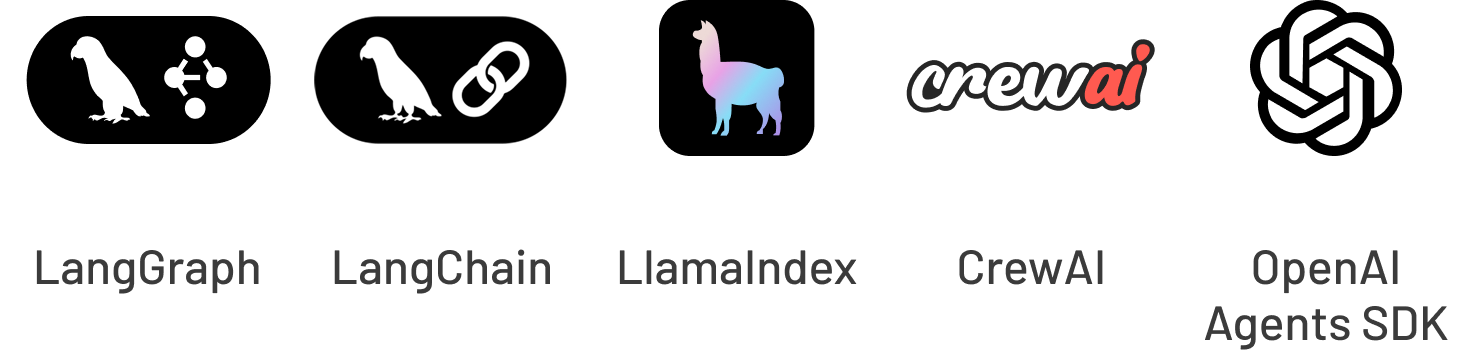
The right framework depends on your requirements, existing stack, and workflow complexity. We commonly use LangGraph for production-grade workflows, CrewAI for rapid multi-agent implementations, and Microsoft Agent Framework for .NET and Azure-centric environments. Our recommendations are based on your needs, not framework preferences.
How do you measure whether an agent is working correctly?
Every engagement includes an evaluation framework. We test agents against real-world scenarios, edge cases, and failure conditions before deployment. After launch, we continuously track metrics such as task completion rate, escalation rate, accuracy, and output quality.
We're in a regulated industry. Are agentic workflows still an option?
Yes. Organizations in financial services, healthcare, insurance, and government are already deploying agentic systems. The key is designing for compliance from the start through audit trails, approval workflows, explainability, and governance controls aligned with regulatory requirements.
How is this different from MLOps?
MLOps focuses on training, deploying, monitoring, and governing machine learning models. Agentic workflows focus on orchestrating LLMs, tools, memory, and decision-making to automate multi-step processes. They solve different problems and often work together within the same AI ecosystem.